



Bcl-2 Family Inhibitor
-
CeY-B1
 0 ImagesCat. No.: HY-188099CAS No.: 2376783-79-6
CeY-B1 is a ceramide analog. CeY-B1 inhibits the proliferation, migration and invasion of cervical cancer cells, induces apoptosis and cell cycle arrest. CeY-B1 upregulates ASK1, promotes the phosphorylation of JNK, downregulates Bcl‑2, and inhibits the PI3K/AKT pathway. CeY-B1 suppresses tumor growth in cervical cancer xenograft mouse models. CeY-B1 can be used for relevant research on cervical cancer.
-
PROTAC B-Raf degrader 1 (Standard)
 0 ImagesCat. No.: HY-111758RCAS No.: 2364367-27-9
PROTAC B-Raf degrader 1 (Standard) is the analytical standard of PROTAC B-Raf degrader 1 (HY-111758). This product is intended for research and analytical applications. PROTAC B-Raf degrader 1 is a PROTAC degrader targeting B-Raf, which recruits the ubiquitin-proteasome system to accelerate B-Raf degradation and reduce the expression of downstream Mcl-1. PROTAC B-Raf degrader 1 inhibits cancer cell proliferation, arrests cell cycle and induces apoptosis. PROTAC B-Raf degrader 1 can be used in breast cancer-related research.
-
MRT68921 dihydrochloride (Standard)
 0 Images
MRT68921 (dihydrochloride) (Standard) is the analytical standard of MRT68921 (dihydrochloride) (HY-100006A). This product is intended for research and analytical applications. MRT68921 dihydrochloride is a potent NUAK1/ULK1 dual inhibitor. MRT68921 dihydrochloride inhibits ULK1 and ULK2 with IC50 values of 2.9 nM and 1.1 nM, respectively. MRT68921 dihydrochloride can block cells autophagy and kill tumor cells by breaking the balance of oxidative stress signals. MRT68921 dihydrochloride can inhibit cell proliferation and induce ROS production and apoptosis. MRT68921 dihydrochloride can be used for the research of cancer, such as breast cancer.
-
S63845 (Standard)
 0 ImagesCat. No.: HY-100741RCAS No.: 1799633-27-4
-
MDB5
 0 ImagesCat. No.: HY-184378CAS No.: 2922221-22-3
MDB5 is a Hedgehog pathway and Smoothened inhibitor that binds to the 7-TM domain of Smo. MDB5 reduces hepatic stellate cell activation, extracellular matrix-related gene expression, collagen deposition, hydroxyproline content and epithelial-mesenchymal transition, and prevents sinusoidal endothelial cell capillarization. MDB5 induces G1 and S phase cell cycle arrest, triggers apoptosis by upregulating Bax and downregulating Bcl-2, and also decreases oxygen consumption rate, glucose uptake, transglutaminase activity and fibronectin matrix assembly. MDB5 reduces the levels of liver injury markers, hepatic triglyceride deposition and hepatic steatosis, restores the tissue structure of the kidney and spleen, and inhibits pancreatic tumor growth without causing body weight loss. MDB5 can be loaded into PEG-PCC-g-DC micelles, achieving high drug loading, sustained release, improved water solubility, enhanced cellular uptake and optimized hepatic distribution, with good tolerance in mice. MDB5 is applicable to research related to alcohol-associated liver disease, liver fibrosis and pancreatic cancer.

-
BAI1 (Standard)
 0 ImagesCat. No.: HY-103269RCAS No.: 335165-68-9
BAI1 (Standard) is the analytical standard of BAI1 (HY-103269). This product is intended for research and analytical applications. BAI1 is a selective and allosteric inhibitor of BAX, an apoptosis regulator. BAI1 directly binds to BAX and allosterically inhibits BAX activation. BAI1 has the potential for the research of diseases mediated by BAX-dependent cell death.
-
BI-3802 (Standard)
 0 ImagesCat. No.: HY-108705RCAS No.: 2166387-65-9
BI-3802 (Standard) is the analytical standard of BI-3802 (HY-108705). This product is intended for research and analytical applications. BI-3802, a chemical probe, is a highly potent BCL6 degrader and inhibits the Bric-à-brac (BTB) domain of BCL6 with an IC50 of ≤3 nM. BI-3802 induces the polymerization of BCL6 and promotes BCL6 degration depended on E3 ligase SIAH1. BI-3802 has antitumor activity.
-
PUMAi
 0 ImagesCat. No.: HY-167182CAS No.: 470695-03-5
PUMAi is a PUMA inhibitor that disrupts the interaction between PUMA and BCL-xL. PUMAi inhibits apoptosis, caspase-3 activation, WNT/NOTCH pathway activation, and DNA damage. PUMAi protects intestinal tissues in mice, promotes the growth of colonoids, and reduces chemotherapy-induced weight loss, gastrointestinal damage, and lethality. PUMAi alleviates acetaminophen-induced liver injury and cytoplasmic translocation of HMGB1 in mice. PUMAi can be used in studies related to gastrointestinal injury, intestinal injury, and liver injury.
-
ABT-737 (Standard)
 0 ImagesCat. No.: HY-50907RCAS No.: 852808-04-9
ABT-737 (Standard) is the analytical standard of ABT-737 (HY-50907). This product is intended for research and analytical applications. ABT-737, a BH3 mimetic, is a potent Bcl-2, Bcl-xL and Bcl-w inhibitor with EC50s of 30.3 nM, 78.7 nM, and 197.8 nM, respectively. ABT-737 induces the disruption of the BCL-2/BAX complex and BAK-dependent but BIM-independent activation of the intrinsic apoptotic pathway. ABT-737 induces autophagy and has the potential for acute myeloid leukemia (AML) research.
-
Daphnoretin (Standard)
 0 Images
Daphnoretin (Dephnoretin; Thymelol) (Standard) is the analytical standard of Daphnoretin (HY-N0699). This product is used for research and analytical applications. Daphnoretin is a protein kinase C (PKC) activator that can inhibit the expression of hepatitis B virus (HBV) surface antigen (HBsAg) and has antiviral activity. Daphnoretin exerts its anti-tumor effect by inhibiting the activation of the PI3K/AKT signaling pathway, triggering the mitochondrial apoptosis pathway. Daphnoretin alleviates chondrocyte apoptosis and inflammatory responses by inhibiting endoplasmic reticulum stress and the activation of the NLRP3 inflammasome. Daphnoretin can regulate the differentiation and maturation of dendritic cells, by down-regulating the phosphorylation level of JNK, inhibiting its immune stimulating function, thereby playing a protective role in skin transplant rejection reactions.
-
RKS262
 0 ImagesCat. No.: HY-113720CAS No.: 1041469-97-9
RKS262 is an orally active cyclin/CDK inhibitor. RKS262 is also an apoptosis inducer and cell cycle regulator, exhibiting cytotoxic activity against cancer cells. RKS262 induces caspase-3 cleavage, ROS generation, SAPK/JNK activation, and upregulates the expression of p53, Bid, Bad, Bok, and p27. RKS262 inhibits the expression of Bcl-2, Mcl-1, Bcl-xL, p21, cyclin D1, cyclin B1, cdc-2, cyclin D4, and DNA-pk KU-80 subunit. RKS262 suppresses the phosphorylation of the IGF-1R/PI3K/PKC pathway, ras oncogene activity, and Cdk-6, while increasing total Akt expression. RKS262 induces G2/M or S phase cell cycle arrest, disrupts mitochondrial transmembrane potential, and reduces tumor burden in xenograft models. RKS262 is used in research on neuroblastoma and ovarian cancer.
-
Hexamethylene bisacetamide (Standard)
 0 ImagesSynonyms: HMBA (Standard)
Hexamethylene bisacetamide (Standard) is the analytical standard of Hexamethylene bisacetamide. This product is intended for research and analytical applications. Hexamethylene bisacetamide (HMBA) is a differentiation inducer and selective bromine domain inhibitor that can differentiate across the blood-brain barrier. Hexamethylene bisacetamide can induce tumor cell differentiation and inhibit cell proliferation, showing antitumor activity. Hexamethylene bisacetamide induces apoptosis by Notch1, Bcl-2 and p53 signaling pathways. In addition, Hexamethylene bisacetamide improves the obesity phenotype of mice.

-
3-Methylxanthine-d3
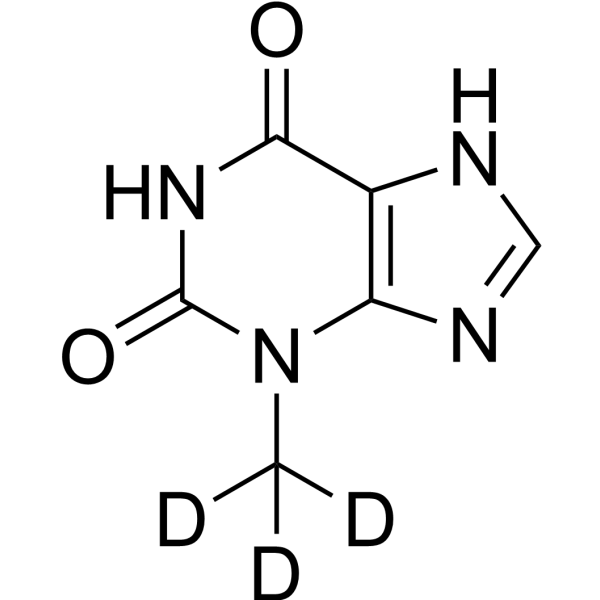 0 ImagesCat. No.: HY-50723S1Purity: 99.61%
3-Methylxanthine-d3 is deuterated labeled 3-Methylxanthine (HY-50723). 3-Methylxanthine is a blood-brain barrier-permeable cyclic GMP phosphodiesterase inhibitor, with an IC50 of 920 μM against guinea pig cyclic GMP phosphodiesterase. 3-Methylxanthine relaxes the spontaneous tension of isolated guinea pig tracheal smooth muscle preparations. Through a DRD1-dependent pathway, 3-Methylxanthine upregulates the expression of γH2AX and activated caspase-3, downregulates the expression of Bcl-2, and enhances Cisplatin-induced apoptosis (apoptosis) in ovarian cancer cells both in vitro and in vivo. 3-Methylxanthine induces clonic convulsions in the central nervous system. 3-Methylxanthine is the major metabolite of Theophylline (HY-B0809). 3-Methylxanthine can be used in studies related to ovarian cancer and neurotoxic convulsions.
-
IG-105
 0 ImagesCat. No.: HY-111175CAS No.: 905978-63-4
IG-105 is an orally active and potent tubulin inhibitor that competitively inhibits [3H] colchicine binding to tubulin with an IC50 of 0.6 μM and inhibits tubulin polymerization with an IC50 of 3 μM. IG-105 inhibits microtubule polymerization by binding to the colchicine pocket of tubulin, induces G2-M phase arrest, and subsequently activates the caspase cascade through Bcl-2 inactivation and p53 upregulation, inducing apoptosis. IG-105 effectively overcomes multidrug resistance as a non-Pgp substrate. IG-105 can be used for research on leukemia, breast cancer, liver cancer, prostate cancer, lung cancer, melanoma, pancreatic cancer, and colon cancer.
-
Murizatoclax (Standard)
 0 ImagesCat. No.: HY-109184RCAS No.: 2245848-05-7Synonyms: AMG 397 (Standard)
Murizatoclax (Standard) is the analytical standard of Murizatoclax (HY-109184). This product is intended for research and analytical applications. Murizatoclax (AMG 397) is a potent, selective and orally active inhibitor of myeloid leukemia 1 (MCL-1) inhibitor, with a Ki of 15 pM. Murizatoclax competitive binds to the BH3-binding groove of MCL1 with pro-apoptotic BCL-2 family members. Murizatoclax can be used for the research of cancer.
-
Mcl1-IN-15
 0 ImagesCat. No.: HY-W286906CAS No.: 518303-27-0
-
Curcumenol (Standard)
 0 ImagesCat. No.: HY-N2259RCAS No.: 19431-84-6Synonyms: (+)-Curcumenol (Standard)
Curcumenol (Standard) ((+)-Curcumenol (Standard)) is the analytical standard of Curcumenol (HY-N2259). This product is intended for research and analytical applications. Curcumenol ((+)-Curcumenol) is a natural compound with oral efficacy, exhibiting an IC50 of 12.6 μM and a Ki of 10.8 μM against human CYP3A4. Curcumenol inhibits TNFα-induced phosphorylation/degradation of IκBα, phosphorylation/nuclear translocation of NF-κB p65, as well as the upregulation of MMP3, MMP9, MMP13, TRAF3, IL1RL1, TNFα and IL-1β. Curcumenol suppresses LPS-induced phosphorylation of Akt and p38 MAPK, as well as the production of pro-inflammatory mediators/proteins, and downregulates the SLC7A11/NF-κB/TGF-β pathway. Curcumenol binds to and inhibits the activation of Fyn and Lyn, blocks the function of downstream FcεRI signaling components, and reduces the release of allergic mediators/cytokines. Curcumenol upregulates the expression of KDM6B, and promotes chondrocyte proliferation and cartilage repair. Curcumenol induces ferroptosis and apoptosis, regulates the EMT process, and inhibits tumor growth and metastasis of triple-negative breast cancer. Curcumenol possesses anti-inflammatory, neuroprotective, antioxidant, antitumor, antiviral and hepatoprotective activities. Curcumenol can be used in research related to intervertebral disc degeneration, cancer, inflammation, central nervous system neurodegenerative diseases, allergic reactions and knee osteoarthritis.
-
CID5721353 (Standard)
 0 ImagesCat. No.: HY-100502RCAS No.: 301356-95-6
CID5721353 (Standard) is the analytical standard of CID5721353 (HY-100502). This product is intended for research and analytical applications. CID5721353 is an inhibitor of BCL6 with an IC50 value of 212 μM, which corresponds to a Ki of 147 μM.



